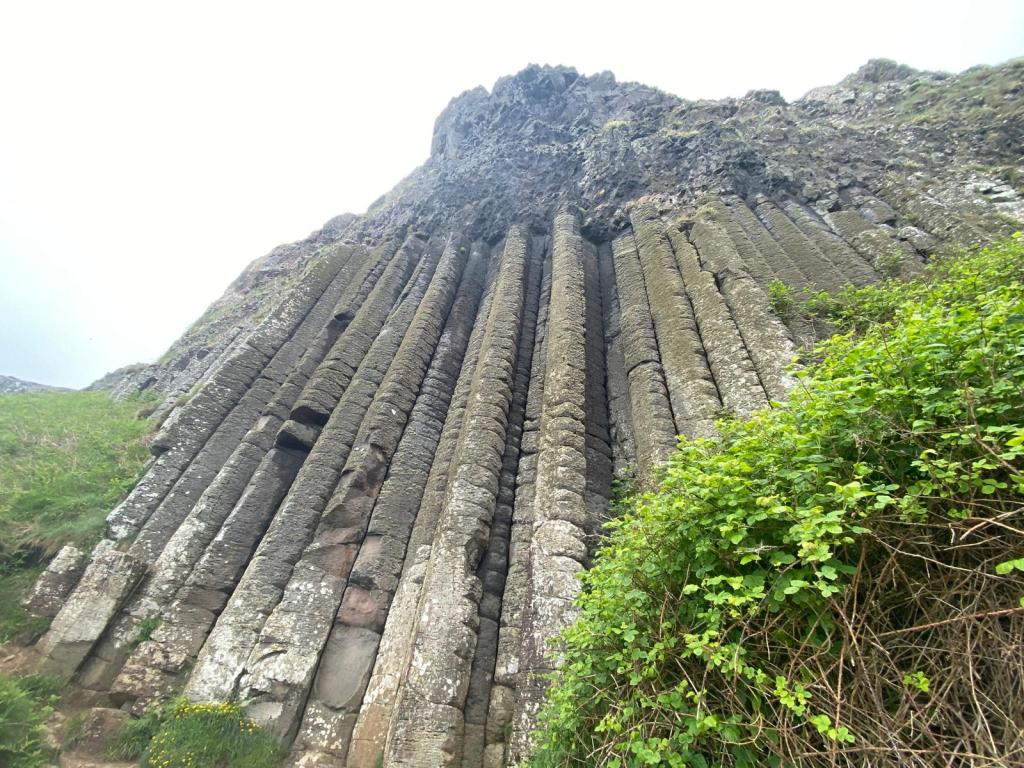
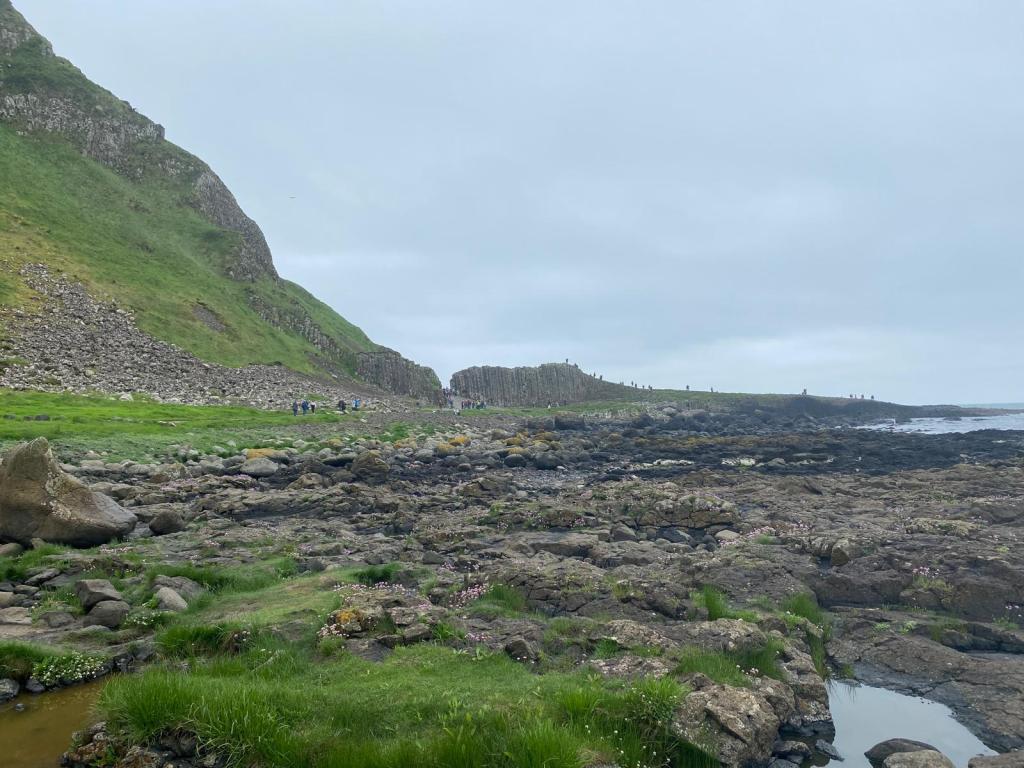
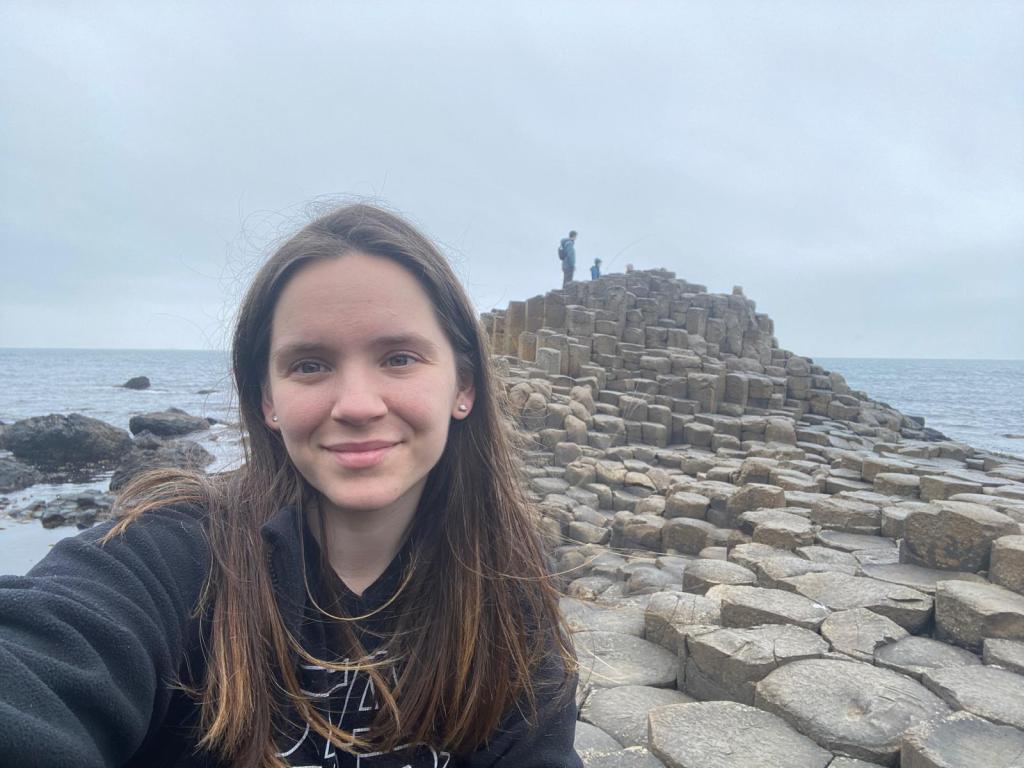
On the northern-most coast of Northern Ireland is a nature reserve so unique that it has given rise to centuries of fantastical tales of giants, war, and love. The Giant’s Causeway is visited by hundreds of people every day who want a chance to explore the hexagonal, basalt pillars that are set into cliff walls and form large mounds along the coast. I can tell you from personal experience that this awe-inspiring site definitely lives up to its mythological reputation.

Giant’s Causeway
The hexagonal columns were formed nearly 60 million years ago when lava and molten rock flowed up through the cracks of the separating European and North American tectonic plates. This formed thick layers of basalt. Erosion gave way to a river valley, which held yet more flowing lava. As the area cooled, lower layers cracked in the hexagonal pattern, and eventually glaciers scraped away the top layers of rock. Years of ocean waves eroded the last of these rock layers and uncovered the large, basalt pillars we see today.
These pillars are such a formidable and unique feature of the land that it is easy to see why myths of giants emerged from them.
“The site’s Irish name, Clocha’n nabh Fombaraigh, translates as ‘the stepping stones of the Fomorii’, the evil, misshapen and violent gods of Irish myth.”
Across the ocean from Northern Ireland are the isles of Scotland. Similar basalt pillar formations are found there, such as the sea cave on the southern tip of the Isle of Staffa. Fingal’s Cave, accessible by a natural walkway only at low tide, is generally seen as the matching half of the Giant’s Causeway.
Myth of War
Much of the mythology surrounding the Giant’s Causeway before the 17th century has been lost, but a few stories still remain. Perhaps the most well-known tale has been saved in literary form by William Hamilton Drummond as The Giant’s Causeway: A Poem, which was published in 1811. This is free online – I really recommend it as it is a beautiful and easy read!
The summary of the myth is as follows:
The Irish Giant Finn Mac Cool, or in Irish ‘Fionn Mac Cumhaill’, built the Causeway so he could fight his Scottish rival, the giant Benandonner. When he had nearly completed his journey across the Causeway to Scotland, Finn was able to spot just how large and formidable Benandonner was, even at a distance. Not confident that he could win such a battle, Finn quickly returned to Ireland where his wife Oonagh awaited him, and told her everything.
However, Benandonner travelled the Causeway to bring the fight to Finn, arriving at Finn and Oonagh’s house with his demand. Oonagh had Finn pretend to be asleep and covered him with a blanket. She then told Benandonner that Finn was out and that the sleeping figure was their child, Oisin. Benandonner took one look at the massive frame and, concluding that Finn as the child’s father must be even larger, fled from Ireland, ripping up the Causeway as he ran to prevent Finn from following.
The only remnants of this structure are at the Giant’s Causeway in Northern Ireland and Fingal’s Cave in Scotland.
Myth of Love
Contrary to the more popular war story above, a lesser-known tale of Giant’s Causeway is, in fact, a love story. In 1830, poet Mary Anne published a different interpretation of the natural formations.
The giant Finn Mac Cool had fallen in love with a Scottish maiden and longed to be with her, but with an ocean between them, the distance was too great to swim. As he skimmed stones across the water, the splash they made gave him an idea. Finn would build a Causeway to take him to his beloved.
He dedicated every waking hour to this task, making great progress but reaching exhaustion by the end of each day. Unbeknownst to Finn, his grandmother was terrified of losing his to Scotland forever. During the night, she would call upon the seas and weather to create great storms that destroyed all progress Finn had made.
Each day, Finn returned, determined to complete his journey. And each night, his grandmother would again use her magic to tear it all apart. Finn eventually spent all day and all night completing the Causeway before it could be destroyed. With every stone, the seas and storms beat at him, but he persevered and finally reached Scotland.
Overcome with exhaustion from such a trial, Finn collapsed and died in the arms of his Scottish love. Behind him, the Causeway was destroyed for the final time. His grandmother climbed to Northern Ireland’s highest peak to survey the results of her efforts. After seeing her dead grandson an ocean’s distance away, she turned to stone, absolutely horrified from what she had done. Her form can still be seen to this day.
Conclusion
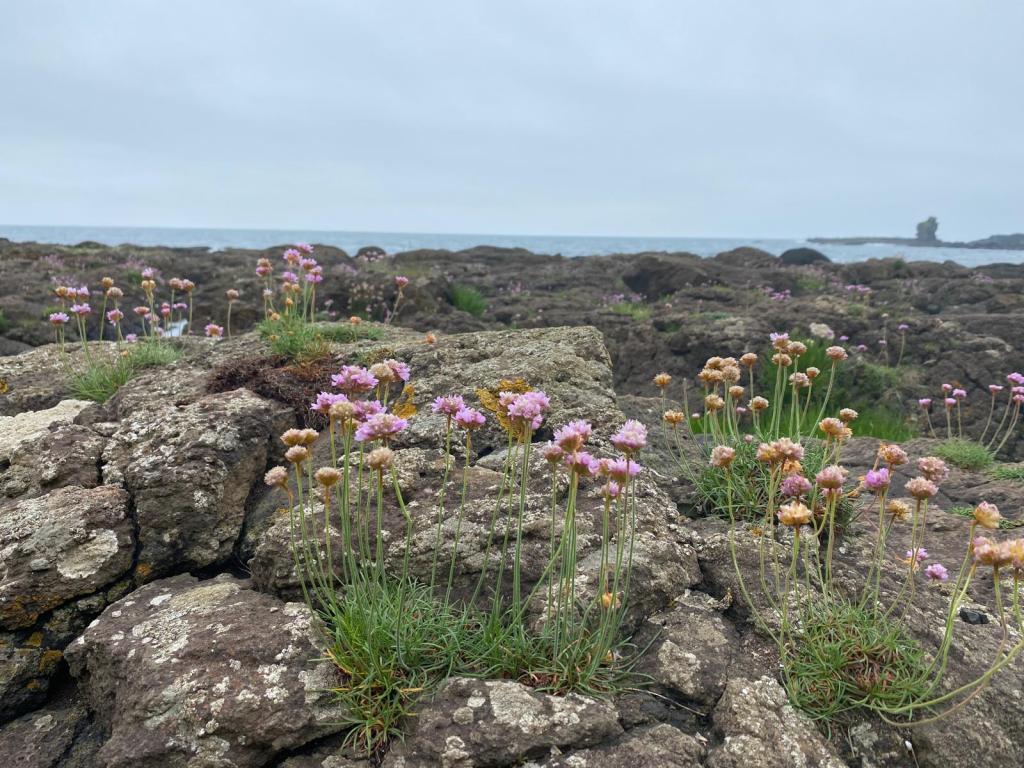
The Giant’s Causeway is a place where myth so clearly meets nature. It is woven into every pillar, every rock formation, and every wave crashing against the cliffs. Science might now tells us how the site was formed, but it’s the myths that keep the magic and mystery of the stones alive for generations, drawing thousands of people to the pillars each year.
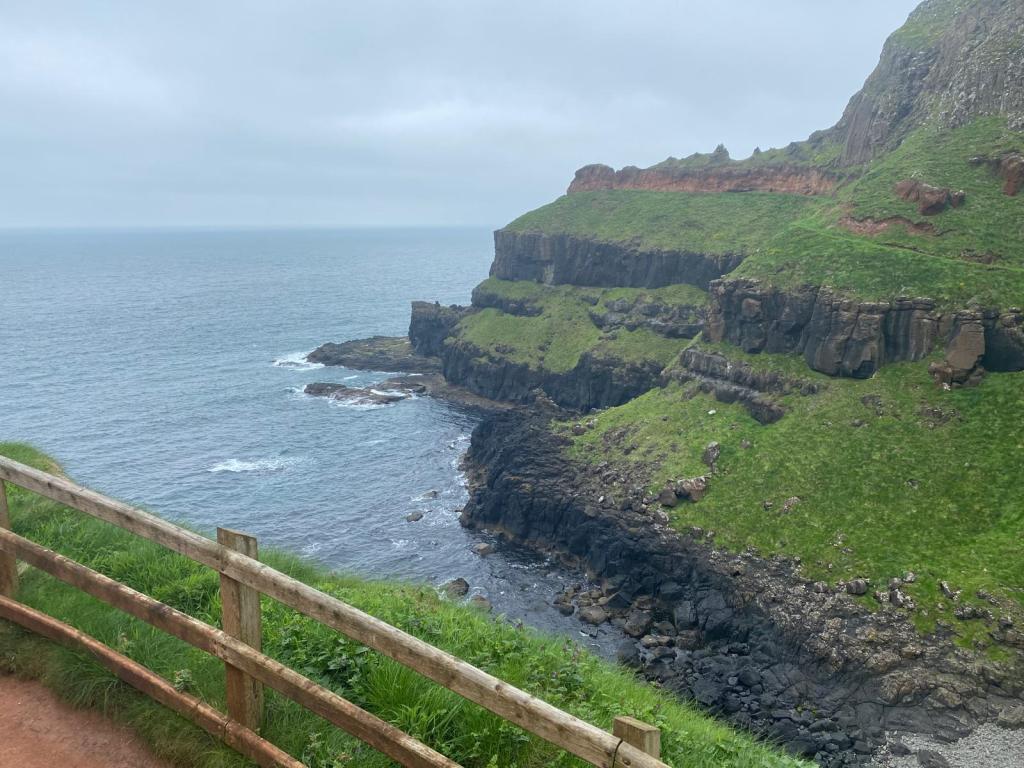
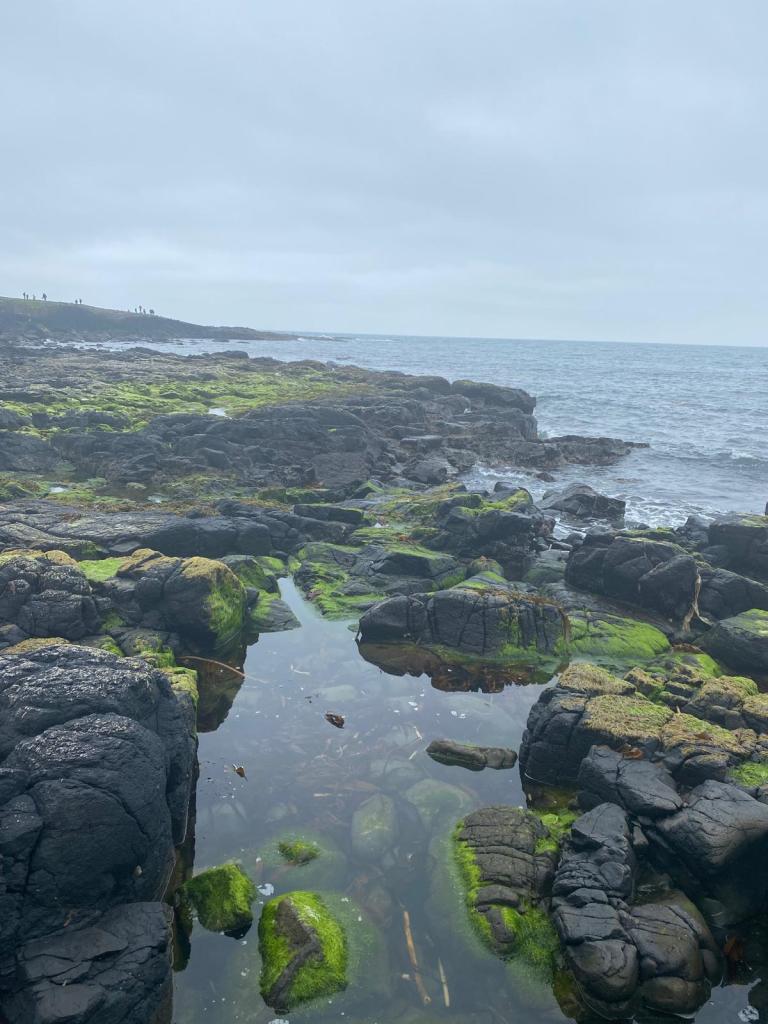
In addition to the Causeway phenomenon, the surrounding area has several easy hikes and walks along the cliff edges that are worth exploring, all of which can be done in a day. The scenery is beautiful, and few others venture out that way, which means you can experience the serenity of the Northern Irish coastline and perhaps come up with your own Causeway myth without interruption.
Note: it is very windy there 🙂
References
Pull quote reference: Kennedy, Alasdair. “In Search of the ‘True Prospect’: Making and Knowing the Giant’s Causeway as a Field Site in the Seventeenth Century.” The British Journal for the History of Science 41, no. 1 (2008): 19–41; Kennedy references P. B. Ellis, A Dictionary of Irish Mythology, London, 1987.


Leave a comment